Simple enough to teach on day one. Powerful enough to run Netflix, power NASA simulations, and train the AI models reshaping every industry.
Go to Course ResourcesPython is a high-level, general-purpose programming language designed for readability and simplicity. Code written in Python looks almost like plain English — there are no curly braces, no mandatory semicolons, and indentation is part of the syntax, not decoration. That philosophy makes it the fastest language to learn and one of the fastest to prototype in.
Python is interpreted, meaning you can run a script immediately without a separate compilation step. It is also dynamically typed, so you don't declare variable types upfront. Combine that with an enormous standard library and the world's largest ecosystem of third-party packages and you have a language that scales from a 10-line script to a million-line enterprise application.
# Python in three lines
names = ["Cruz", "Alice", "Bob"]
for name in names:
print(f"Hello, {name}!")
Python didn't become the world's most-used language by accident. Several things compound to make it uniquely powerful.
Python's concise syntax means you write 3–5x fewer lines than Java or C++ for the same task. Less code = fewer bugs, faster iteration, faster time to production.
PyPI (the Python Package Index) hosts over 500,000 packages. Whatever you need — web servers, database drivers, ML frameworks, image processing — someone has already built it.
Python connects easily with C/C++, Java, databases, REST APIs, and cloud services. It acts as the glue between systems written in different languages — which is why it dominates data pipelines and automation.
Python was explicitly designed so code reads like a specification. That makes onboarding new engineers faster, code reviews more productive, and long-term maintenance significantly cheaper.
Write once, run on Windows, macOS, and Linux without modification. Python also runs in the browser via Pyodide, on microcontrollers via MicroPython, and in serverless cloud functions.
Python is the most-taught language at U.S. universities. It lets beginners focus on problem-solving and logic instead of wrestling with syntax — and the skills transfer directly to the workplace.
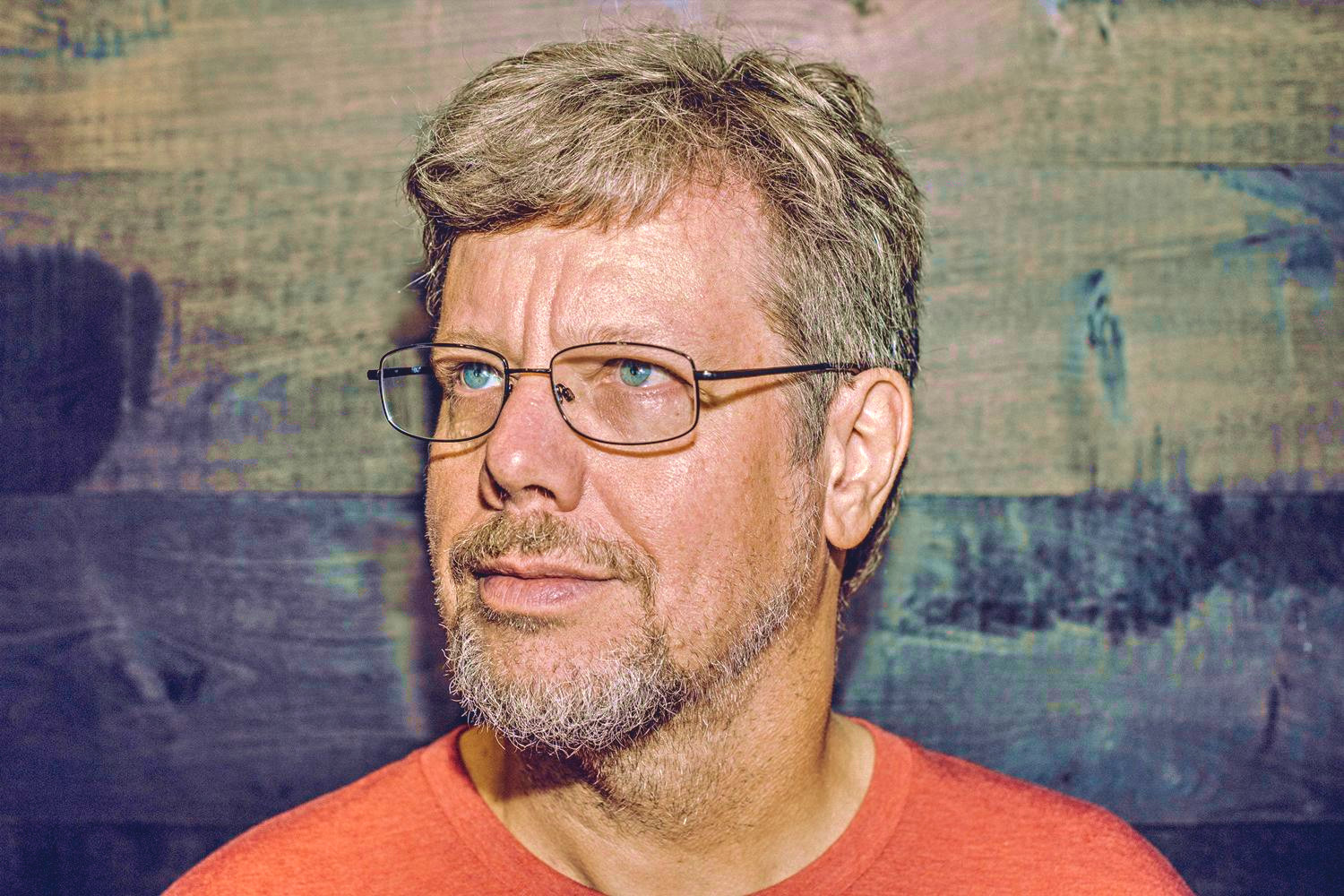
Python was created by Dutch programmer Guido van Rossum during the Christmas holiday of 1989. Working at Centrum Wiskunde & Informatica (CWI) in the Netherlands, Guido wanted a scripting language that improved on the ABC language he had worked on — one that was easy to read and didn't require the ceremony of C or shell scripts.
He named it after Monty Python's Flying Circus, the British comedy troupe — not the snake. The first public version (0.9.0) was released in February 1991. Python 2.0 followed in 2000 with list comprehensions and garbage collection. Python 3.0, released in 2008, was a deliberate backwards-incompatible redesign that cleaned up a decade of rough edges. The Python 2 line was retired in 2020.
Guido served as Python's Benevolent Dictator For Life (BDFL) until 2018, when he stepped back from day-to-day governance. The language is now stewarded by the Python Software Foundation (PSF) and a five-member elected Steering Council. Development happens entirely in the open on GitHub.
A library (or package) is a collection of pre-written code you import into your program. Instead of reinventing the wheel, you install a package and call its functions. This is why Python developers can build in days what would take months from scratch.
Python is no longer a niche scripting language. It is used by the world's largest companies, government agencies, research institutions, and independent developers across virtually every sector.
Python processes genomic data, runs clinical trial simulations, and powers imaging analysis tools. Libraries like Biopython and PySpark handle data at scales no spreadsheet can touch.
Banks, hedge funds, and trading platforms use Python for quantitative analysis, algorithmic trading, fraud detection, and risk modeling. JPMorgan, Goldman Sachs, and PayPal are heavy users.
NASA uses Python for mission analysis and spacecraft software. The CIA, FBI, and NSA all list Python as a required skill. It was used to process the first image of a black hole (Event Horizon Telescope).
Netflix's recommendation engine, Spotify's Discover Weekly, and YouTube's search ranking are all Python-driven. Industrial Light & Magic uses Python for visual effects pipelines.
Utilities (including here in the Central Valley) use Python for SCADA data analysis, grid modeling, outage prediction, and automating the reporting that used to take engineers days by hand.
Python is the language of academic computing. Every major university uses it in statistics, social science, physics, and computer science. Jupyter notebooks have replaced Excel in many research labs.
Some predicted that AI tools would make programming languages obsolete. The opposite happened. Python's importance has accelerated because AI needs Python more than Python needs AI.
Every major large language model — GPT-4, Claude, Gemini, LLaMA — was trained using Python. PyTorch and TensorFlow are Python-first. The entire ML research pipeline runs on Python.
APIs for OpenAI, Anthropic, Google Gemini, and every other AI provider have Python SDKs as their first-class client. Python is the lingua franca for integrating AI into real applications.
AI models are only as good as the data they're trained on. The people who build and maintain data pipelines — using Pandas, Spark, and Airflow — are in higher demand than ever. All Python.
With GitHub Copilot and Claude Code, a Python developer can do 3–5x the work of one without AI assistance. Python's readability makes AI-generated code easier to review and trust — a feedback loop that rewards Python knowledge.
Learning Python in 2026 is not a hedge against AI. It is how you work with it.
The students who understand the fundamentals will be the ones who can direct, audit, and extend what AI produces.
Browse the course resources I use in my Python classes at CSU Stanislaus — installers, cheat sheets, coding labs, and reference material all in one place.